
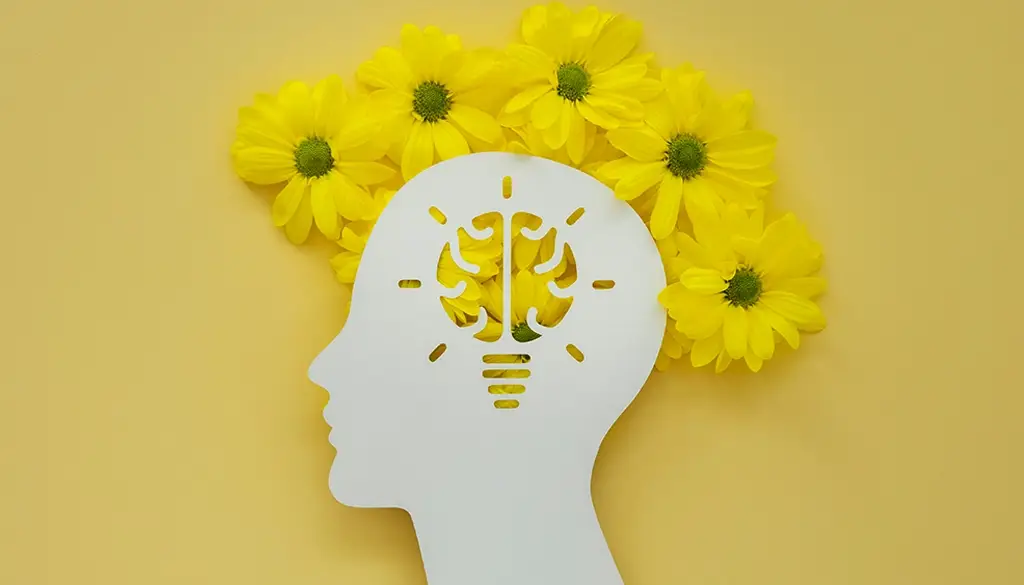
The “aha” moment: It’s a magical feeling.
You’re reading a book or talking with a friend, and suddenly, something just clicks:
“I don’t have to say yes just because someone asks.”
“I’ve been measuring my worth by how productive I am.”
“I can’t control what happens, but I can choose how I respond.”
“Aha” moments can feel incredibly powerful and freeing. It’s like standing on the summit of a mountain: For a moment, you can see everything clearly: the limiting beliefs you’ve been carrying; the unmet need beneath the behavior pattern; the agency available to you in every moment.
But as awe-inspiring as summit views are, you eventually have to come back down the mountain, clambering over obstacles as that pristine view disappears behind the tree line. Time passes. Your schedule fills up. An old trigger catches you off guard. You slip back into familiar patterns, questioning whether that “aha” moment ever meant anything at all.
There’s a reason it feels that way. Because “aha” moments feel so powerful, we tend to think of them as ending points. Solutions. But they’re actually catalysts: sparks meant to ignite the flames of growth.
And sparks need to be tended: fueled and fanned until they catch.
Feed the Spark
An “aha” moment can give you a new way of seeing something. But for that new perspective to become more familiar, your brain needs opportunities to return to it.
That’s where neuroplasticity comes in.
Neuroplasticity is the brain’s ability to change and adapt in response to our experiences. When we learn something new or repeatedly engage in a particular way of thinking or behaving, the connections between neurons can change and strengthen. In other words, what we practice can help shape the pathways our brains use.
Maybe your “aha” moment looked like realizing how much more kindly you speak to others than to yourself. Each time you notice self-criticism and consciously choose a more compassionate response, you’re practicing a new pattern. Over time, the pattern becomes more second nature.
Or maybe you want to be more present. Every time you notice your mind racing ahead and bring your attention back to what’s happening right now, you’re practicing presence. With repetition, returning to the moment begins to feel more natural.
That doesn’t mean you have to practice perfectly or turn your latest realization into a rigid new routine. Neuroplasticity isn’t an overnight process, and lasting change rarely comes from doing something once.
The goal is simply to give your brain more experiences of the direction you want to go. And those experiences can be small.
Imagine your aha moment is this:
“I spend so much time thinking about what’s next that I miss what’s happening now.”
You could respond by deciding you’re going to meditate for 30 minutes every morning, journal every night, and delete all the social media apps from your phone.
Or you could take one conscious breath every time you get into your car.
The second option might not feel life-changing. But it takes an abstract goal (the desire to be more present) and turns it into a realistic, achievable practice. And because you’ve connected it to something you already do, you’ve built in a reminder to practice it again tomorrow.
This is sometimes called an “anchor”: an ordinary moment that reminds you to pause and practice.
A few examples:
- Every time you brush your teeth, think of something you’re grateful for.
- Every time you stop at a red light, unclench your jaw.
- Every night before bed, name one thing that went well that day.
Research has found that these kinds of “if-then” plans can make it more likely that we follow through on our intentions. A meta-analysis of 94 studies found that implementation intentions had a medium-to-large positive effect on goal attainment.
It doesn’t have to be complicated. Just look for something that already happens in your day and let it become a reminder.
Fan the Flame
“Aha” moments are the spark; turning them into practice fans the flame. Over time, small practices add up to life-changing transformation.
That’s the idea behind Sparkle Revolution. With short, guided practices in awareness, gratitude, manifestation, and more, Sparkle gives you simple ways to return to your intentions throughout the day. Daily prompts provide the reminder, so you don’t have to figure out when or how to fit another practice into your routine.
Some days, those few minutes might spark a new insight. Other days, they might help you reconnect with one you’ve already had.
Transformation doesn’t happen in the “aha” moment alone. It happens in all the ordinary moments that come after it — when you have the opportunity to practice what you’ve learned, one small choice at a time.
Keep the spark burning. Build a daily practice with Sparkle Revolution.
